


|
|
|
 Mad Men is an American period drama television series created and produced by Matthew Weiner. The show is broadcast on the American cable network AMC and is produced by Lionsgate Television. It premiered on July 19, 2007 and completed its second season on October 26, 2008. The third season began on August 16, 2009 and will conclude on November 8. It has been renewed by AMC for a fourth season, which will air in 2010.
Set in New York City, Mad Men is set in the 1960s at the fictional Sterling Cooper advertising agency on Madison Avenue. The show centers on Don Draper (Jon Hamm), the agency's creative director, and those in his life, in and out of the office. It also depicts the changing social mores of 1960s America.
Mad Men has received critical acclaim, particularly for its historical authenticity and visual style, and has won multiple awards, including nine Emmys and three Golden Globes. It is the first basic cable series to win the Emmy Award for Outstanding Drama Series.
 Jason Mraz (pronounced /məˈræz/; born June 23, 1977) is an American singer-songwriter, born and raised in Mechanicsville, Virginia. Mraz's stylistic influences include reggae, pop, rock, folk, jazz, and hip hop. Mraz's international breakthrough came with the release of lead single from We Sing. We Dance. We Steal Things. titled "I'm Yours". The single peaked at number six on the Billboard Hot 100, giving Mraz his first top ten single. The song was a huge commercial success in the US with it receiving a triple-Platinum certification from the RIAA for sales of over three million. The song was successful internationally and topped the charts in New Zealand and Norway and peaking in the top ten of multiple international charts.
 The Black Eyed Peas (BEP) is an American hip hop musical group based in Los Angeles. The group is composed by will.i.am, apl.de.ap, Taboo, and Fergie. Since their album Elephunk in 2003, the group's hip hop/dance-oriented style has sold an estimated 29 million albums worldwide and 27 million singles. They scored their first worldwide hit with "Where Is The Love?" in 2003, which topped over ten charts worldwide.

Viva la Vida or Death and All His Friends is the fourth studio album by English alternative rock band Coldplay, released 11 June 2008 on Parlophone Records. The album was named after a Spanish phrase that translates in English as "long live life". Recording sessions for the album took place during June 2007 to April 2008 and featured production by Jon Hopkins, Rik Simpson, Markus Dravs and Brian Eno.
Viva la Vida was released to critical and commercial success. Four singles have been released in promotion of the album; "Violet Hill" and "Viva la Vida" in May 2008, and "Lovers in Japan" and "Lost!" in November 2008. "Viva la Vida" became the band's first song to reach number one in both the United States and the United Kingdom.
 "Ready or Not" is the second single from The Fugees' 1996 album The Score. The song contains a sample of "Boadicea" by Enya, and its chorus is based on "Ready or Not (Here I Come) " by The Delfonics. The song spent two weeks atop the UK Singles Chart in September 1996.
Singer Enya was prepared to sue the group for copyright infringement, because she had not permitted the group to sample the song "Boadicea", from her 1992 album The Celts. She eventually settled out of court.
The song was covered by European house music artist The Course in 1997. It reached #5 in the
U.S. President Barack Obama named "Ready or Not" as his favorite song in a top 10 list submitted to Blender in August 2008.
The Fugees were a critically acclaimed New York hip hop group that rose to fame in the mid-1990s, whose repertoire included elements of soul and Caribbean music, particularly reggae. The members of the group are rapper/singer/producer Wyclef Jean, rapper/singer Lauryn Hill, and rapper Pras Michel. Deriving their name from the term refugee, Jean and Michel are Haitian Americans, while Hill is African American. The group recorded two albums — one of which, The Score (1996), was a multi-platinum and Grammy-winning success — before disbanding in 1997. Hill and Jean each went on to successful solo recording careers; Michel focused on soundtrack recordings and acting, though he found commercial success with his song "Ghetto Supastar". Michel and Jean are also cousins.
FUGEES
"Ready or Not" (1996)
[CHORUS:]
Ready Or Not, Here I Come, You Can't Hide
Gonna Find You and Take it Slowly
Ready Or Not, Here I Come, You Can't Hide
Gonna Find You and Make you want me.
[CLEF:]
Now that I escape, sleepwalker awake
Those who could relate know the world ain't cake
Jail bars ain't golden gates
Those who fake, they break,
When they meet their
If I could rule the world
Everyone would have a gun in the ghetto of course
When giddyupin' on their horse
I Kick a rhyme drinkin' moonshine
I pour a sip on the concrete, for the deceased
But no don't weep, Wyclef's in a state of sleep
Thinkin' 'bout the robbery that I did last week.
Money in the bag, banker looked like a drag
I want to play with pelicans from here to Baghdad
Gun blast, think fast, I think I'm hit
My girl pinched my hips to see if I still exist.
I think not, I'll send a letter to my friends,
A born again hooligan only to be king again.
[LAURYN:]
I play my enemies like a game of chess, where I rest,
No stress
If you don't smoke sess, lest.
I must confess, my destiny's manifest
In some Goretex and sweats I make treks like I'm homeless
Rap orgies with Porgy and Bess,
Capture your bounty like Elliot Ness, YES
Bless you if you represent the Fu
But I'll hex you with some witch's brew if you're Doo Doo
Voo Doo,
I can do what you do, easy, BELIEVE ME
Frontin' niggas give me hee-bee-gee-bees
So while you're imitating Al Capone
I'll be Nina Simone
And defacating on your microphone.
[Chorus:]
Ready Or Not, Here I Come, You Can't Hide
Gonna Find You and Take it Slowly
[LAURYN'S INTERLUDE]
You can't run away
From these styles I got, oh baby, hey baby
Cause I got a lot, oh yeah
And anywhere you go
My whole crew's gonna know
You can't hide from the block, oh no.
[PRAZ:]
Ready or not, refugees takin' over
The Buffalo soldier, dread-lock rhasta
On the twelfth hour, fly by in my bomber
Crews run for cover, now they're under pushin' up flowers
Superfly true lies, do or die,
Toss me high - only puff la,
With my crew from lock high
I refugee from Guantanamo Bay
Dance around the border like I'm Cassius Clay
[Chorus (Lauryn) REPEAT 3X:]
Ready Or Not, Here I Come, You Can't Hide
Gonna Find You and Take it Slowly
Ready Or Not, Here I Come, You Can't Hide
Gonna Find You and Make You Want Me
Have hard times inspired a newfound frugality in you? These steps will help make it last even after the economy improves.
Americans have put themselves on a budget. They're spurning Caribbean vacations, $10 cocktails and designer coffees in favor of shoveling more money into savings accounts. In the first quarter of 2009, the personal savings rate hit 4.2%, its highest level since 1998. At the same time, consumer credit card debt fell by 6.5%. And in a recent survey by the National Foundation for Credit Counseling (NFCC), 57% of Americans said they're spending less than they were a year ago.
That moderation, it turns out, could outlast the recession, and most economists and consumer experts say that's a good thing. In the NFCC survey, about half the respondents who had reduced their spending said they would continue to spend less even if their financial situation improved. "The consumer has fundamentally changed," says Margot Bogue, associate director of brand planning for the advertising firm Cramer-Krasselt. The new "evolved consumer," she says, shops with more discipline and focuses on buying products with lasting value rather than just accumulating stuff.To take advantage of that shift and thrive in the new, post-recession economy, consider making these 10 changes:
1. Rethink your lifestyle. Veronica Neilan, a 25-year-old Brooklynite who recently completed a master's degree in forensic mental-health counseling, is considering moving back to her mother's house in New Hampshire while she looks for a job. She will soon need to start paying back the $113,000 in student loans she has accumulated over the past seven years. She's learned to ask for things such as pasta or gift certificates from relatives who are giving her presents, a move that keeps her food costs down. She rarely buys new clothes unless they are on sale or she can use a gift certificate, and when she needed a new television, she found one online being given away. Neilan says she expects her frugal behavior to stick. "I don't want to be the person who buys a house they can't afford," she says.
Robbie Blinkoff, principal anthropologist at Context-Based Research Group, a consulting firm that recently conducted interviews with consumers, says lifestyle overhauls like Neilan's are easier for younger consumers to adopt. "They're just learning habits about how to consume. It will last into the recovery," he says, just as the Great Depression turned many people who are now in their 80s and 90s into lifelong savers.
2. Eliminate small expenses that add up. After Deborah Pont, 41, of Stonington, Conn., was laid off from her communications job at a large financial services firm in January, she dramatically reduced her budget: She stopped going out to dinner, shopping, visiting expensive hair salons and getting her nails done. She also rediscovered grocery store coupons and started buying what's on sale. It was easy, in part because so many of her friends were making similar cutbacks. "Everybody else said, 'Let's not go out, let's not spend too much money,' so somebody would make dinner and we'd go to their house," Pont says.
What she discovered is that it's a relief not to feel pressure to spend so much. She has more time for things she enjoys, such as gardening and home improvement projects, and says she probably won't return to regular spa visits even after finding a new job.
Blinkoff says Pont's discovery is not uncommon. "People have kind of woken up, and they feel the things they consumed don't match who they are and their identity," he says.
3. Downsize -- permanently. Doreen Orion, 49, a psychiatrist and author of the memoir "Queen of the Road," also decided to turn a temporary exercise in minimalism into a longer-term lifestyle. She initially cringed at the thought of leaving her dream house in Boulder, Colo., and her 200 pairs of shoes to go on a road trip with her husband. But at his insistence, they spent a year living in a 340-square-foot bus, camping throughout the country.

4. Get competitive about it. The recession inspired yoga studio owner Annie Mahon, 46, of Washington, D.C., to start a competition with her husband to see who could go longer without buying anything new. (They make exceptions for groceries, medicine and certain items for their four children.) Instead of curling up with catalogs that arrive in the mail, Mahon puts them directly into the recycling bin. "It feels great, because afterward, there's no residual feeling of, 'Oh, I wish I had gotten this.' So far, it doesn't feel like I'm missing anything. It feels like I'm gaining," she says. Wanting or craving things soaked up energy, Mahon adds. She estimated that, six weeks into the competition, she had saved at least $1,000.
5. Take advantage of the way retailers have changed. An advertising campaign touts that "summer costs less at Wal-Mart." One television spot features the simple pleasures of the season, including hot dogs, Popsicles and running through sprinklers. Target's "New Day" ad campaign, which ran from September through May, highlighted ways to save money: cutting hair at home, staying in for a movie night, biking to work.
Lena Michaud, a Target spokeswoman, says the company has seen sales increase for products that let people cut costs by staying home, including nail polish and hair color, single-serve coffee brewers and popcorn poppers. People also are making the most of what they already have. Michaud says Target's sales of scarves and fashion hats have gone up as customers freshen up old outfits with new accessories.

 Our credit crisis
John Quelch, a marketing professor at Harvard Business School, says that although the length of the recession will determine just how long the newfound frugality lasts, up to 10% of consumers will change their behavior on a sustained basis. "Many of those changes will be in favor of reducing consumption and a simplified lifestyle," he says.
Although these consumers are still in the minority, there are enough of them to make retailers take note. "It's a huge shift in buying power," says Quelch. Because consumer spending makes up such a large portion of our economy (about 70% of gross domestic product), 10% of consumers also represents a huge dollar value.
6. Make use of new government policies. New programs from government and financial institutions encourage consumers to hold on to their thrifty habits. Recently passed credit card legislation makes it harder for people under 21 to get credit. Congress also allocated funds for financial counseling for those facing foreclosure and already requires counseling for those considering bankruptcy.
7. Educate yourself. Susan Keating, president of the NFCC, says her organization is pushing lawmakers to require pre-purchase counseling for first-time homebuyers and for people considering nontraditional mortgages. In the NFCC's survey, 28% of respondents said the terms of their mortgage turned out to be different from what they expected. "That suggests they didn't understand it going in," says Keating. The NFCC would also like financial education courses to be mandated in high schools. Some states, including Missouri and New Mexico, already have such requirements, but most do not.
8. Save more. President Barack Obama has suggested providing savings incentives to low- and middle-income Americans by matching half of the first $1,000 such families set aside. It's those groups that have the most trouble saving, says Tamara Draut, vice president of policy and programs at the research organization Demos and author of "Strapped: Why America's 20- and 30-Somethings Can't Get Ahead." Government data on savings rates aren't broken down by income level, and Draut suspects that those in the higher income brackets are driving the recent increase in savings rates. "They have the ability to move the aggregate in a way that might be masking the continued declines in savings among low- and middle-income people," she says.Even before the recession, Draut says, low-income households were struggling to pay for necessities, such as health care, food and child care, let alone scrape together enough for a savings account.
9. Look for a better bank. Kevin Martin, executive vice president of personal financial services at HSBC, says financial institutions have an opportunity to turn Americans' newfound habits into lifelong behaviors. Banks that offer automatic deposits, online banking, no fees and no minimum requirements for opening accounts make it easier for people to save money, he says. (See "Ditch your bank for a credit union" for another option.)
10. Don't overdo your newfound frugality. That's not to say most consumers are going to cut up their credit cards and lead lives devoid of material pleasures. Americans love to shop, after all. But they'll likely be more thoughtful about where and when they dole out that hard-earned dough. As tax refunds arrive, Bogue says, people may opt for some selective indulgences. "One consumer told us, 'If I get $1,000 back (in tax refunds), I may buy a $300 purse. If I don't do it, I'll go crazy,'" she recalls.
But the new splurges will probably be tightly controlled, Bogue says. "People come out of the frugality fatigue, and then they're grounded. They have discipline. . . . It's never going to go back to the way it was. We've been so rocked to our core."
This article was reported by Kimberly Palmer for U.S. News & World Report.
Published Aug. 28, 2009
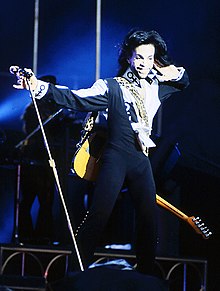 Prince Rogers Nelson (born June 7, 1958) is an American musician. He performs under the mononym of Prince but has also been known by various other names, most notably the unpronounceable symbol
 which he used as his stage name between 1993 and 2000. During this period, he was usually referred to as The artist formerly known as Prince.
Prince is a songwriter and musician, having released several hundred songs both under his own name and with other artists. He has won seven Grammy Awards, a Golden Globe, and an Academy Award. He was inducted into the Rock and Roll Hall of Fame the first year he was eligible in 2004. Rolling Stone ranked Prince #28 on its list of the 100 Greatest Artists of All Time in 2008.
Prince's musical palette covers many musical genres including R&B, soul, funk, rock, blues, new wave, psychedelia, folk, jazz and hip hop. Some of his influences are Jimi Hendrix, James Brown, Sly & the Family Stone, Curtis Mayfield, Parliament-Funkadelic, Stevie Wonder, Carlos Santana, Joni Mitchell, the Beatles, Duke Ellington and Miles Davis. The distinctive characteristics of his early-to-mid 1980s work, such as sparse and industrial-sounding drum machine arrangements and the use of synthesizer riffs to serve the role traditionally occupied by horn riffs in earlier R&B, funk and soul music, were called the "Minneapolis sound" and have proved very influential.


Michael Joseph Jackson (August 29, 1958 – June 25, 2009) was an American recording artist, entertainer and businessman. The seventh child of the Jackson family, he made his début to the professional music scene at the age of 11 as a member of The Jackson 5 in 1969, and began a solo career in 1971 while still a member of the group. Referred to as the "King of Pop"[2] in subsequent years, his 1982 album Thriller is the world's best-selling record of all time[3] and four other solo studio albums are also among the world's best-selling records: Off the Wall (1979), Bad (1987), Dangerous (1991) and HIStory (1995).
In the early 1980s, he became a dominant figure in popular music and the first African-American entertainer to amass a strong crossover following on MTV. The popularity of his music videos airing on MTV, such as "Beat It", "Billie Jean" and Thriller—widely credited with transforming the music video from a promotional tool into an art form—helped bring the relatively new channel to fame. Videos such as "Black or White" and "Scream" made Jackson an enduring staple on MTV in the 1990s. With stage performances and music videos, Jackson popularized a number of physically complicated dance techniques, such as the robot and the moonwalk. His distinctive musical sound and vocal style influenced many hip hop, pop and contemporary R&B artists. While Jackson was a member of Generation Jones [4][5], his influence impacted multiple generations.
Whenever and wherever people shall have occasion to congregate, then and there shall be the time, place and means of their education.Alfred Kilpatrick, founder of Frontier College, (1899).
"Wherever democracy has fallen, it was too exclusively political in nature. It had not become part of the bone and blood of people in daily conduct. Unless democratic habits of thought are part of the fiber of a people, political democracy is insecure."
John Dewey
Schools are, indeed, one important method of the transmission which forms the dispositions of the immature; but it is only one means, and compared with other agencies, a relatively superficial means.
John Dewey, Democracy and Education (1916)
 Amy Macdonald (born 25 August 1987 in Bishopbriggs, East Dunbartonshire) is a Scottish singer and songwriter. Her debut album, This Is The Life, was released on 30 July 2007 and has sold more than 2.5 million copies. Her first single, "Poison Prince", was released on 7 May 2007. She played shows at music festivals such as Glastonbury, Hyde Park, T in the Park, and V festival. Amy is signed to record company Vertigo. Amy's vocal range is contralto. Macdonald started playing on stage acoustic gigs at 15. Her influences include Travis, Pete Doherty, and The Libertines. After several shows in mainland Europe, Macdonald played at festivals such as V Fest during the summer of 2008. In 2008, Macdonald was engaged to Falkirk striker Steve Lovell.


This is an insectivorous bird of open country, often near habitation and water. It prefers bare areas for feeding, where it can see and pursue its prey. In urban areas it has adapted to foraging on paved areas such as car parks.
It nests in crevices in stone walls and similar natural and man-made structures.
The most conspicuous habit of this species is a near-constant tail wagging, a trait that has given the species, and indeed the genus, its common name. In spite of the ubiquity of this behaviour, the reasons for it are poorly understood. It has been suggested that it may flush prey, or signal submissiveness to other wagtails. A recent study has suggested instead that it is a signal of vigilance to potential predators.
The exact composition of the diet of White Wagtails varies by location, but terrestrial and aquatic insects and other small invertebrates form the major part of the diet. These range from beetles, dragonflies, small snails, spiders, worms, crustaceans, to maggots found in carcasses and, most importantly, flies in the order Diptera. Small fish fry have also been recorded in the diet. The White Wagtail is somewhat unusual in the parts of it range where it is non-migratory as it is an insectivorous bird that continues to feed on insects during the winter (most other insectivorous birds in temperate climates migrate or switch to more vegetable matter).
White Wagtails are monogamous and defend breeding territories. The breeding season for most is from April to August, with the season starting later further north. Both sexes are responsible for building the nest, which is a rough cup assembled from twigs, grass, leaves and other plant matter. The nest is set into a crevice or hole; traditionally in a bank next to a river, but the species has also adapted to nesting in walls, bridges and buildings. Around 3-8 eggs are laid, with the usual number being 4-6. Both parents incubate the eggs, although the female generally does so for longer and incubates at night. The eggs begin to hatch after 12 days (sometimes as late as 16 days). Both parents feed the chicks until they fledge at around 14 days, and the chicks are fed for another week after fledging.
The White Wagtail makes a cup nest of dried grass, which it lines with soft materials, including animal hair. Its eggs are cream-coloured, often with a faint bluish-green or turquoise tint, and heavily spotted with reddish brown; they measure, on average, 21 x 15 mm (0.83 x 0.59 inches).Though it is known to be a host species for the Common Cuckoo, the White Wagtail typically deserts its nest if it has been parasitised. Scientists theorise that this occurs because the wagtail is too small to push the intruding egg out of the nest, and too short-billed to destroy the egg by puncturing it.


 |


